
The Scary Woods Tutorial

For those of you working through the owl block, you might find the sides of the owl a little difficult to create, so i have taken some photos to help you navigate the side sections. I will mention that it is important to follow the pressing instructions given in the pattern.
Small fabric pieces with brown and white patterns arranged in a sequence on a white surface.
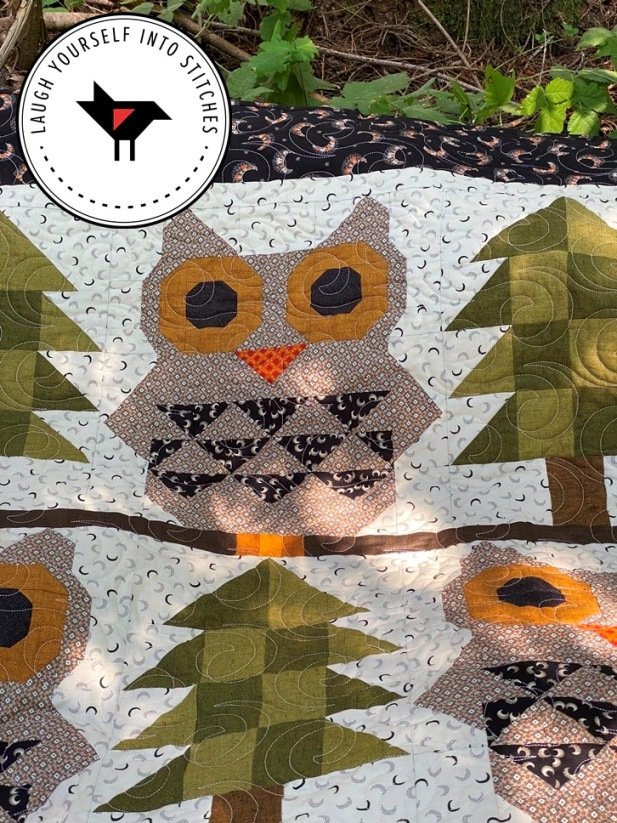
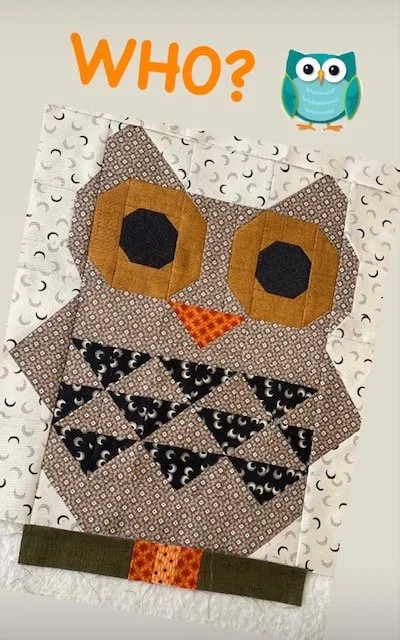
Patchwork quilt of an owl with large eyes, orange beak, and patterned wings, with the word "WHO?" and an owl icon at the top.

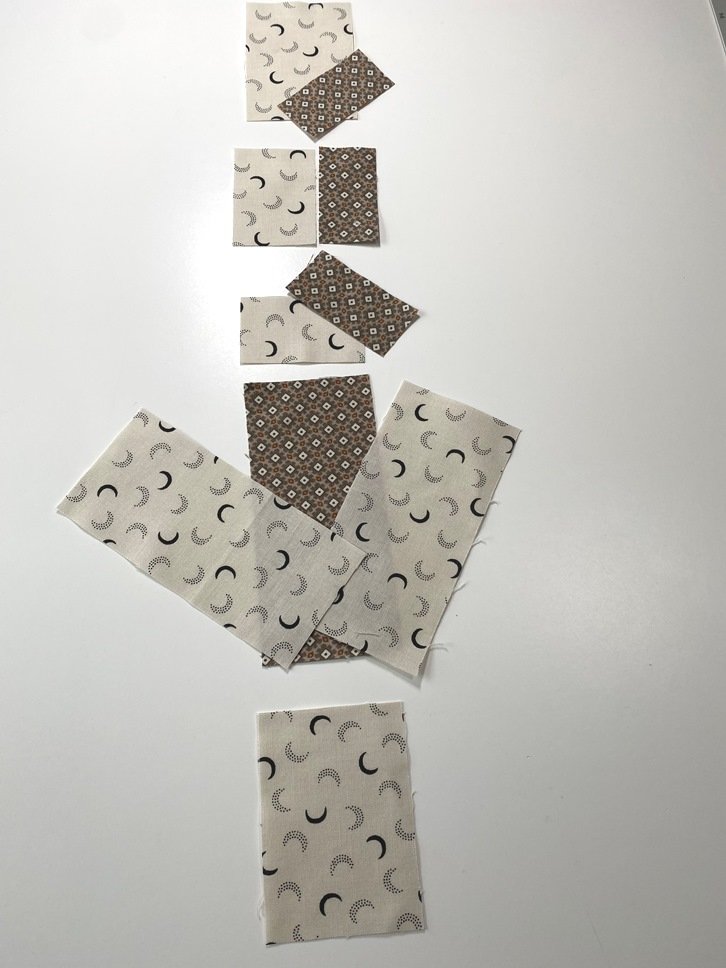
Photo 1 is the layout for the left side section of the owl, starting from the top is Unit ‘a’ ending with the bottom background rectangle as unit ‘e’.
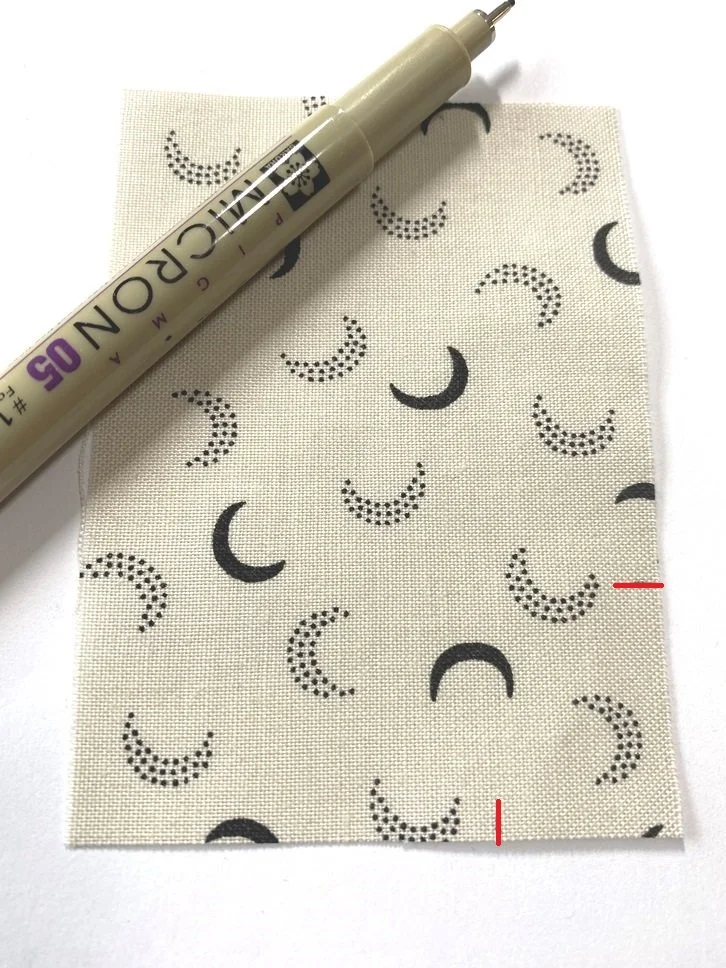
Cream-colored fabric with black crescent moon and dotted moon patterns, with a beige fabric marker resting on top of it.
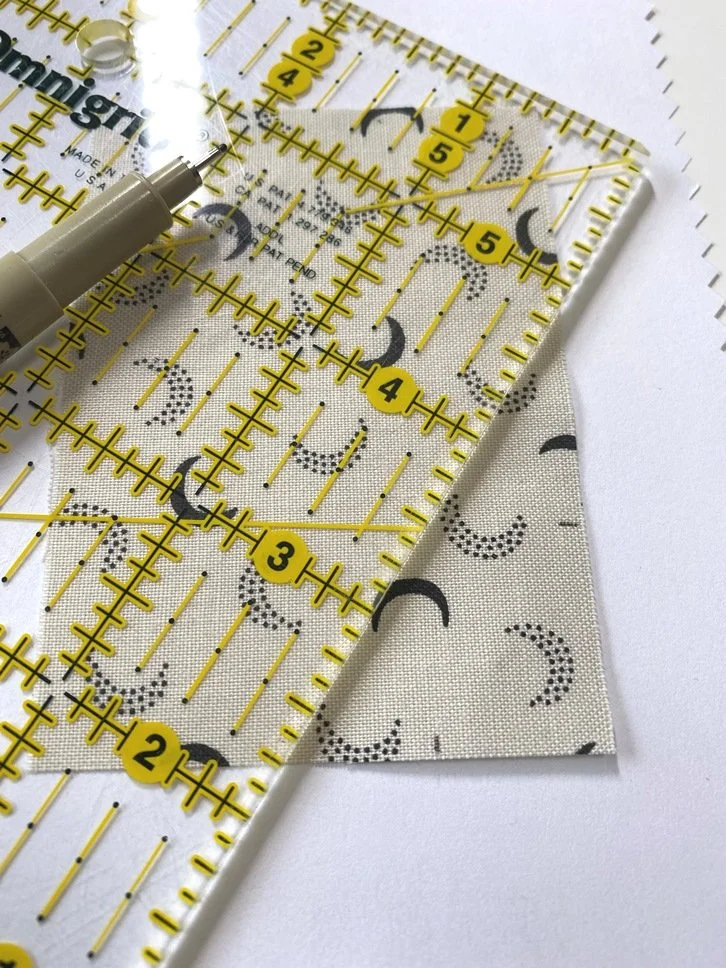
A quilting ruler with yellow measurement markings on a fabric with black crescent moon patterns, a fabric marker, and a piece of fabric underneath.
A piece of fabric with a pattern of black and dotted crescent moons on a light background.

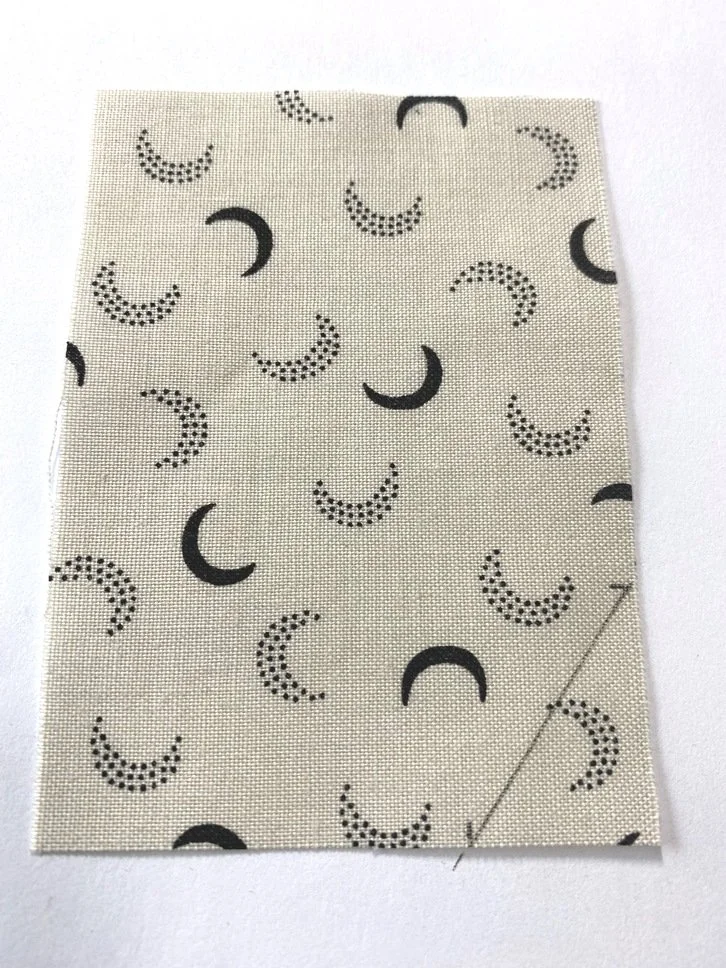
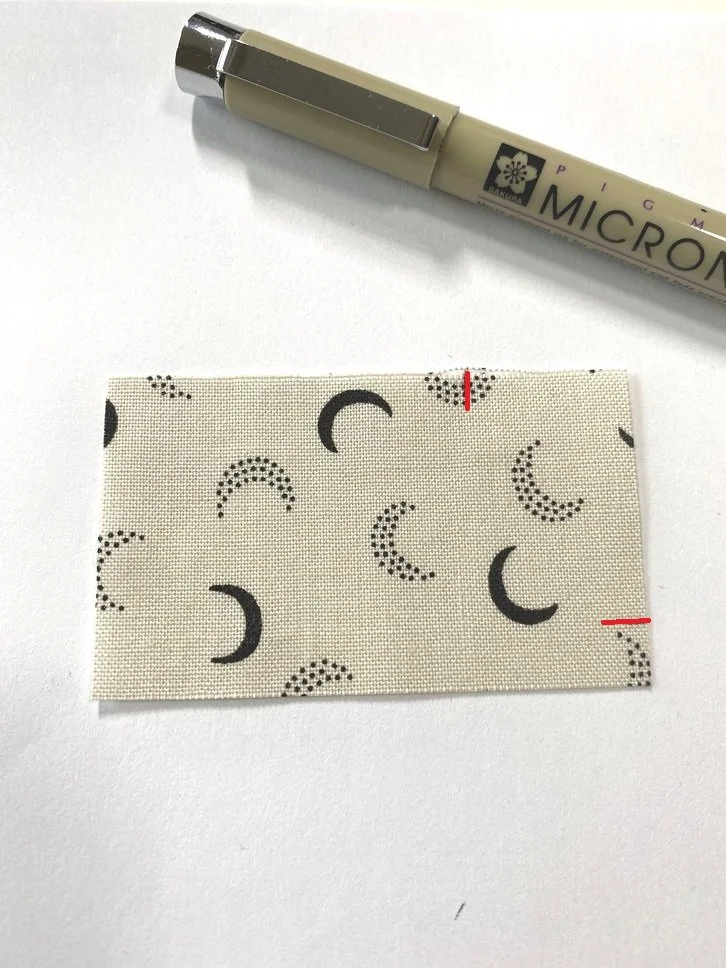
Refer to Unit ‘a’ on page 5 and make a mark 1” up from the bottom right hand corner and 3/4” over from the bottom right hand corner.

Draw a diagonal line between the markings
Two pieces of fabric, one with moon and star patterns and the other with geometric designs, laid on a white background.
Two fabric swatches with moon and star patterns, one cream with black moons and dotted stars, the other gray with geometric shapes and orange accents.
Two pieces of fabric, one cream-colored with a crescent moon pattern and one smaller dark-colored with a geometric pattern, positioned on a white background.
A piece of fabric with a beige background and small black crescent moon patterns, placed on top of a stack of similar fabric pieces, on a white surface.

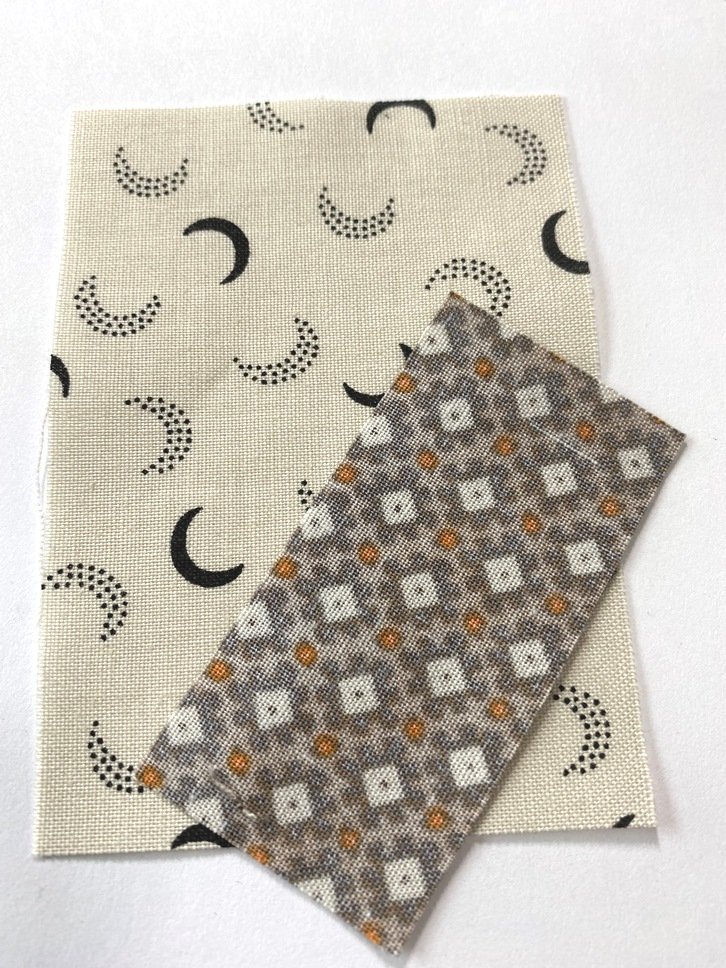
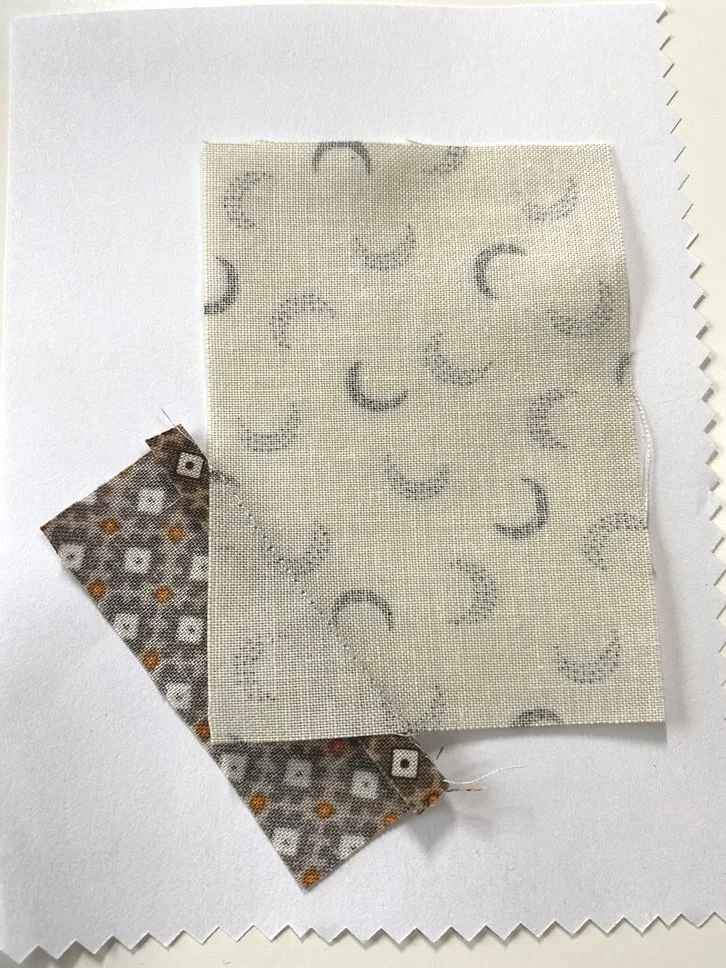
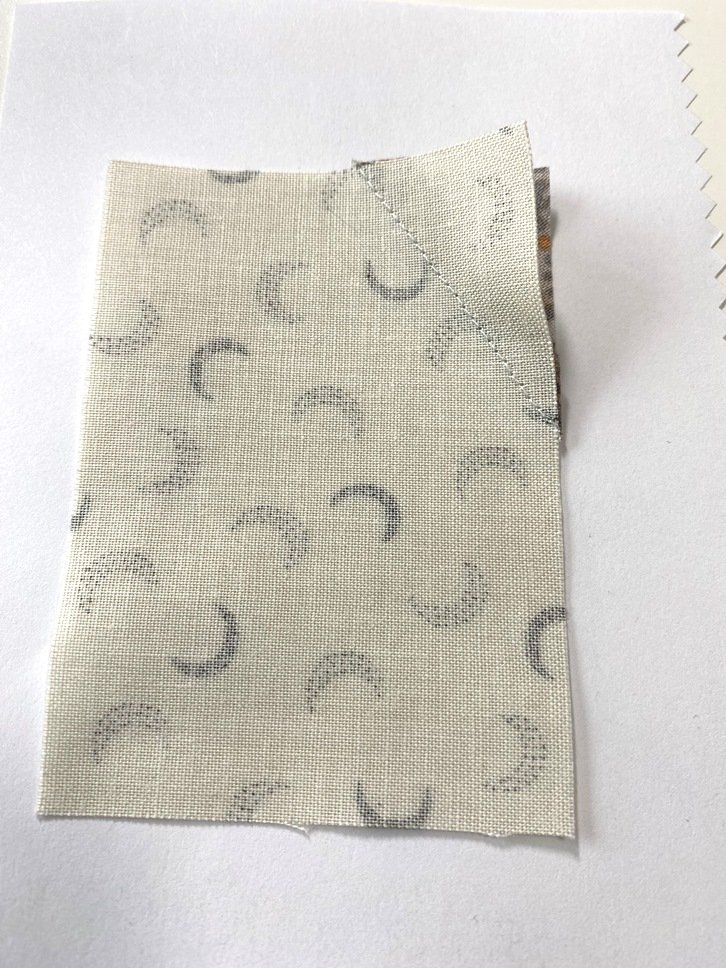
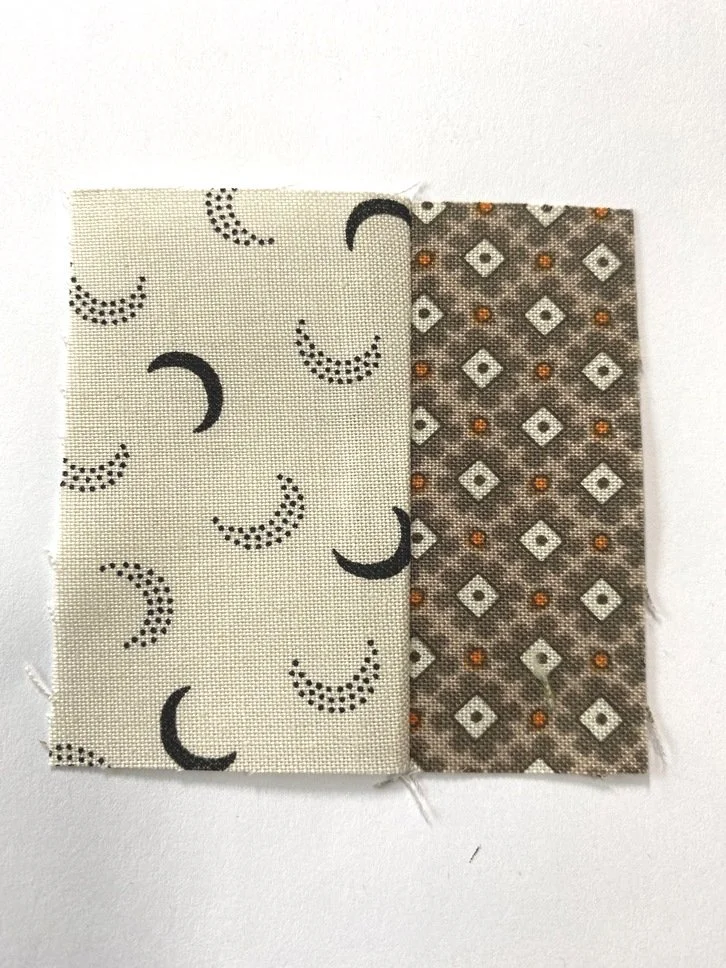
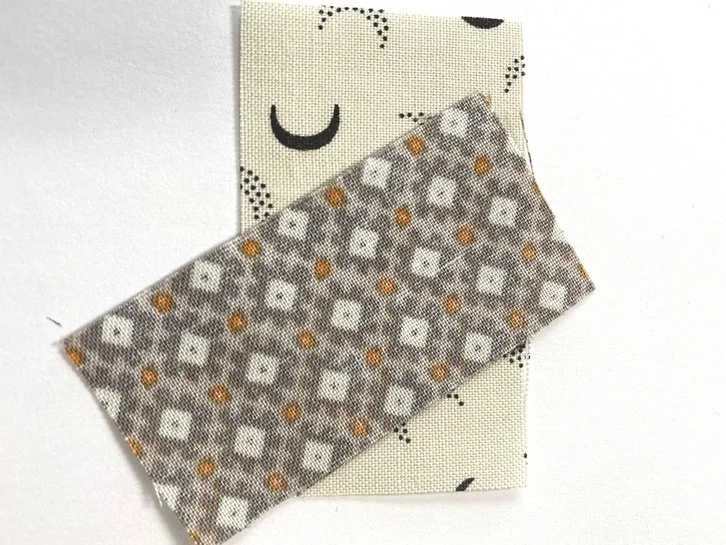
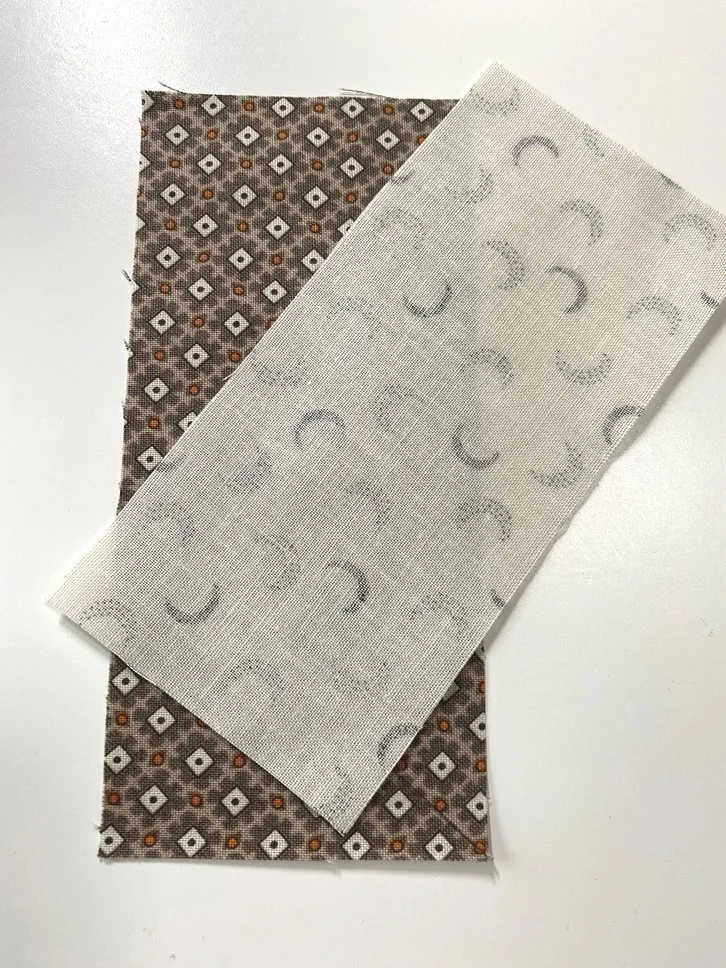
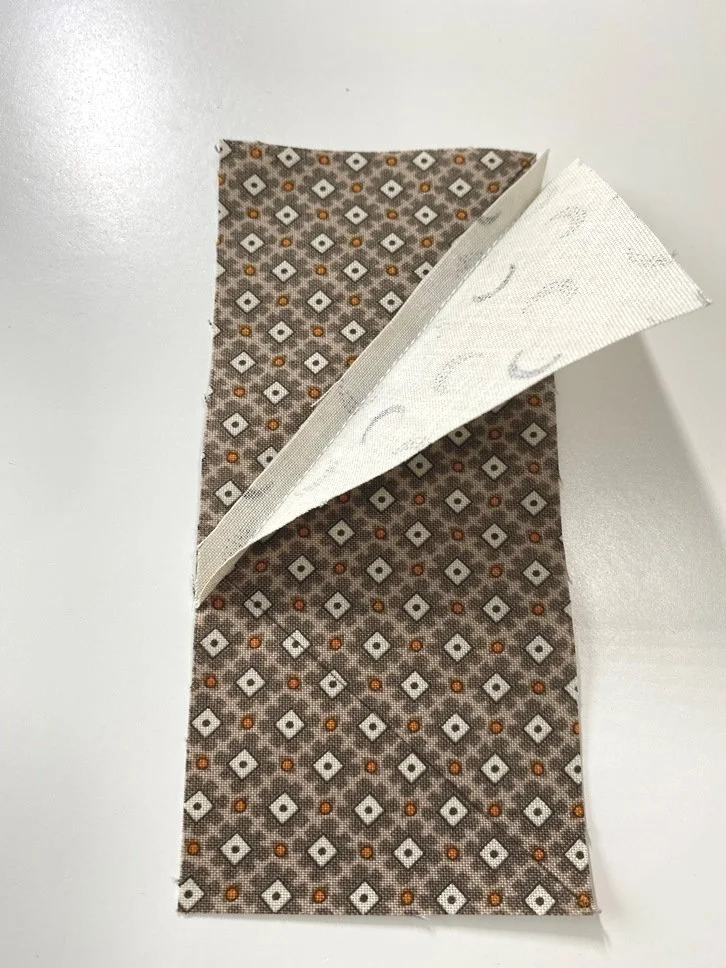
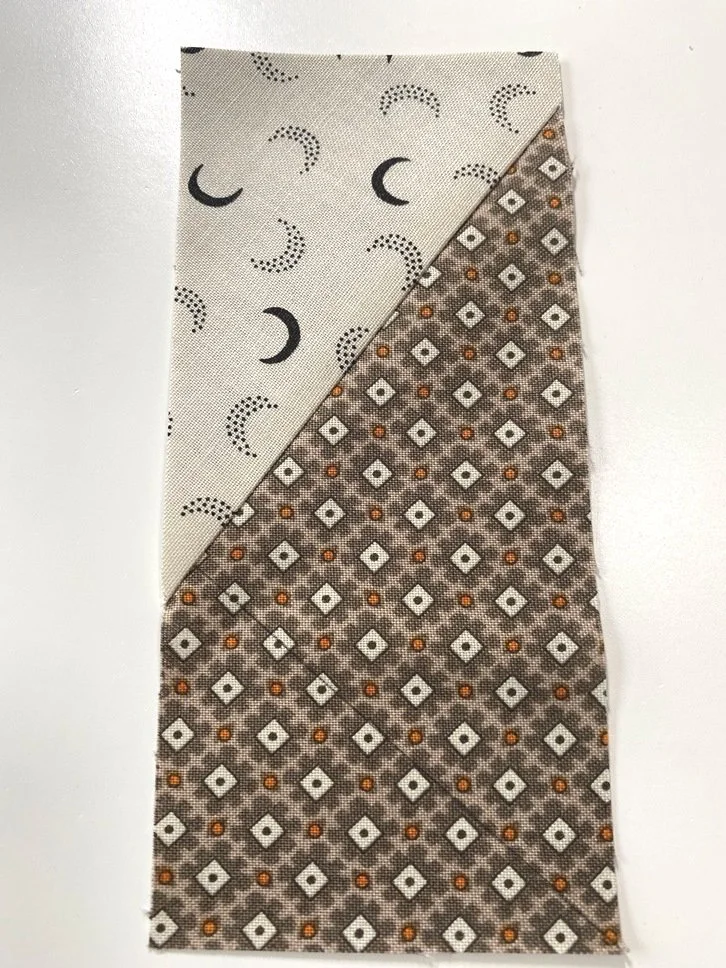
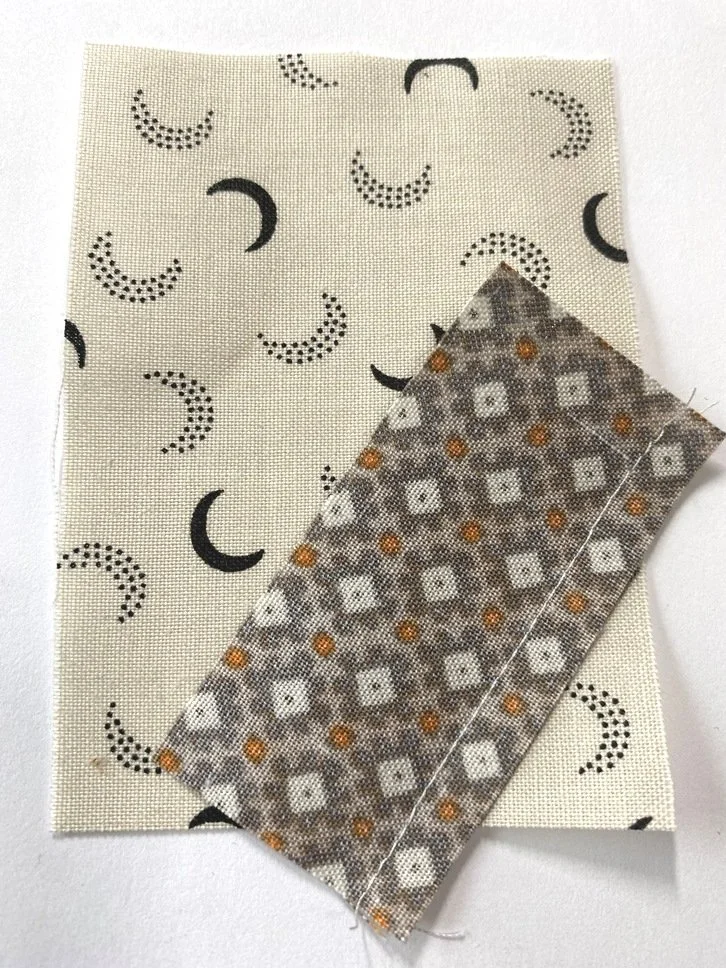
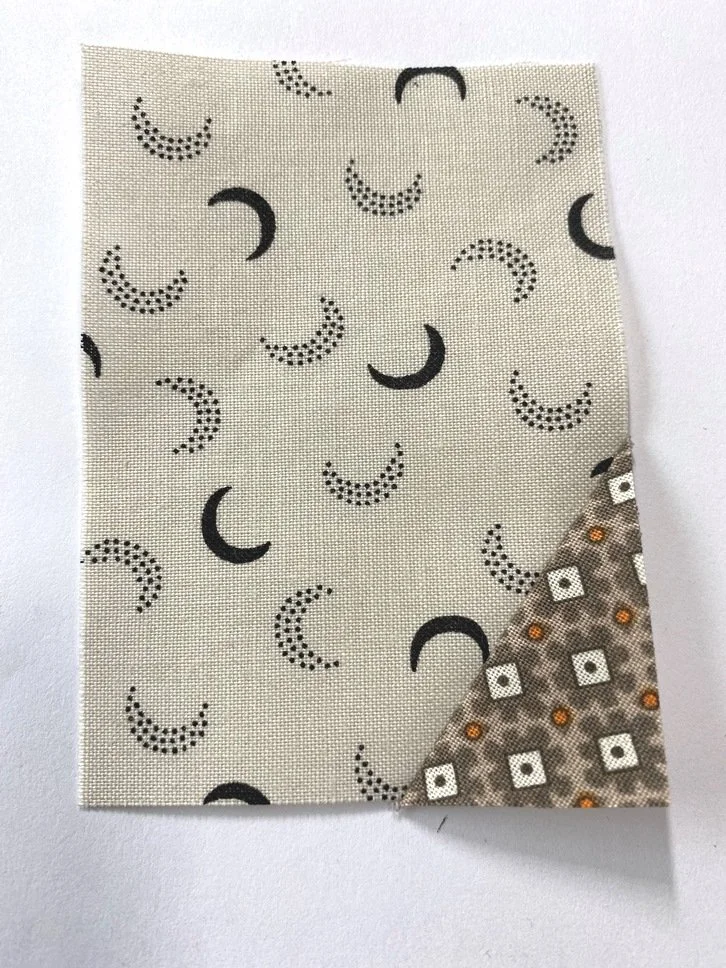
Place the brown owl fabric right sides together along the drawn line and stitch a 1/4” away. Press towards the brown and trim from the back side of the unit maintaining the size of the original background rectangle. Trim the excess underneath.
A piece of fabric with a pattern of black crescent moons and dotted crescent moons, with one corner folded to reveal a contrasting geometric pattern underneath.
Two fabric swatches with decorative patterns, one with black crescent moons and dotted curves on a cream background, the other with a geometric pattern of diamonds and small orange dots on a brown background.
Two patterned fabric swatches with raw edges, one with black crescent moons on a white background and the other with geometric shapes in brown, orange, and white.
Close-up of a piece of fabric with black crescent moon and dotted circle patterns, a gold and silver pen on a white surface, and two small red marks on the fabric.

This complete Unit ‘a’.

Unit ‘b’ consists a background rectangle and an owl rectangle. Sew the two together to complete Unit ‘b’.

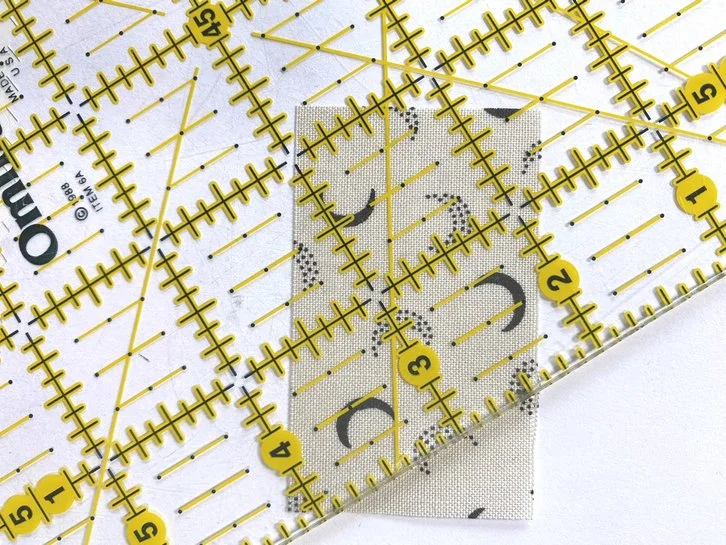
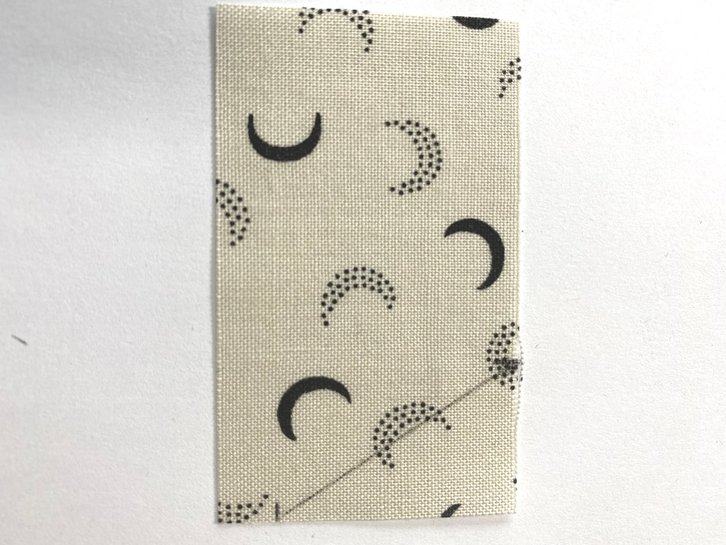
Unit ‘c’ begins by making a mark 3/4” over from the top right hand corner and a 1/4” mark up from the bottom right hand corner
Multiple yellow rulers and a transparent grid ruler placed on fabric with black printed text, overlapping each other to measure fabric patterns.
Rectangular piece of fabric with black crescent moon and dotted semi-circular patterns on a white background
Two embroidered pieces of fabric, one with a moon and star design and the other with a geometric pattern, laid on a white background.
A piece of fabric with a white background and black crescent moon and dotted dot pattern, partially folded to reveal a corner with additional geometric pattern in gray, white, and orange on a plain white surface.

Unit ‘c’ is much like Unit ‘a’. Draw a diagonal line between the 2 markings. Line the owl fabric right sides together along the drawn line, sew, flip and press. Trim underneath to complete Unit ‘c’
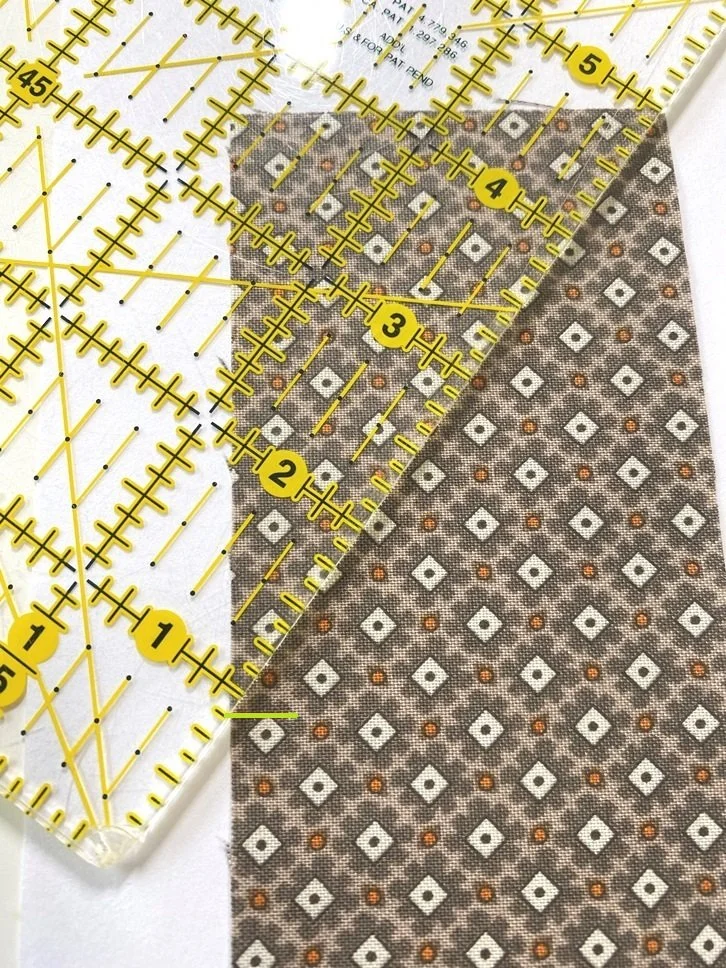
A fabric swatch with a diamond and dot pattern, placed under a clear quilting ruler with yellow measurement markings and grid lines for sewing or craft measurements.
A fabric with a geometric pattern next to a clear quilting ruler with yellow measurements, placed on a white surface.
A rectangular piece of fabric with a geometric pattern of white diamonds and small orange circles on a brown background, with a red line measuring its diagonal.
Two fabric pieces, one with a geometric diamond pattern in brown, white, and orange, and the other with a semicircular moon pattern in gray, placed on a white surface.

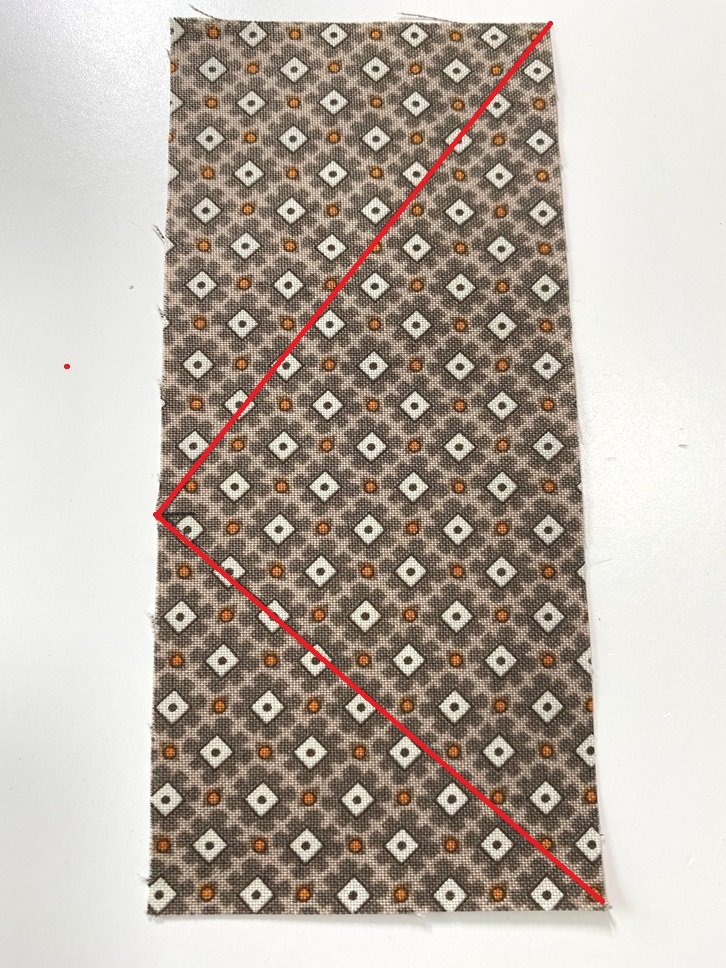
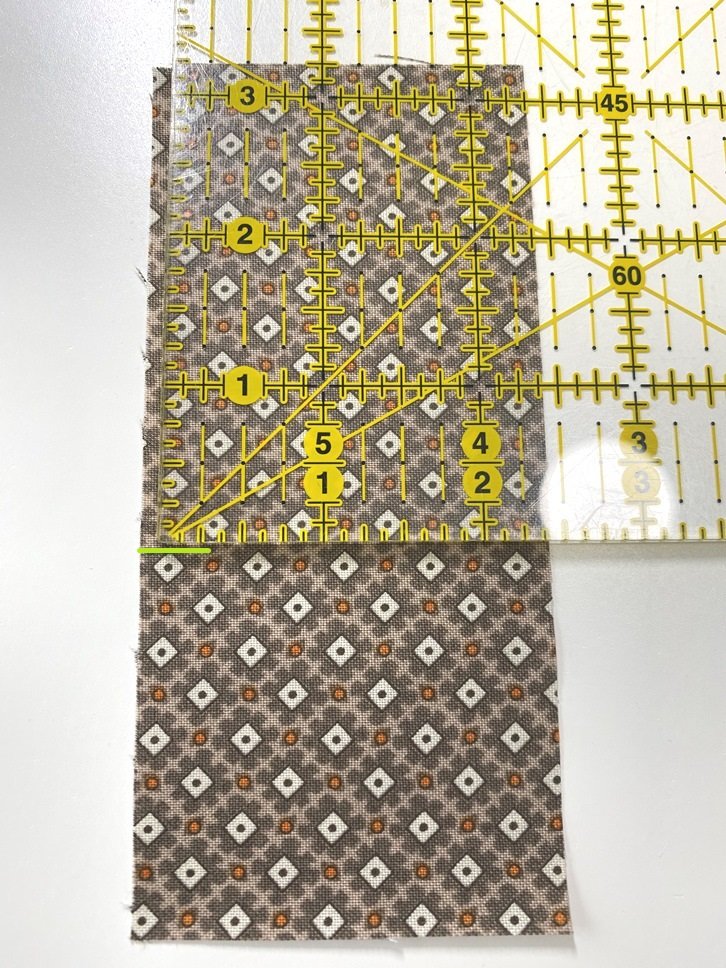
Begin the owl feather or Unit ‘d’ by making a mark 3-1/4” down the side.

Draw a diagonal line from the upper right hand corner to the mark

Draw a second line from the bottom right hand corner to the mark
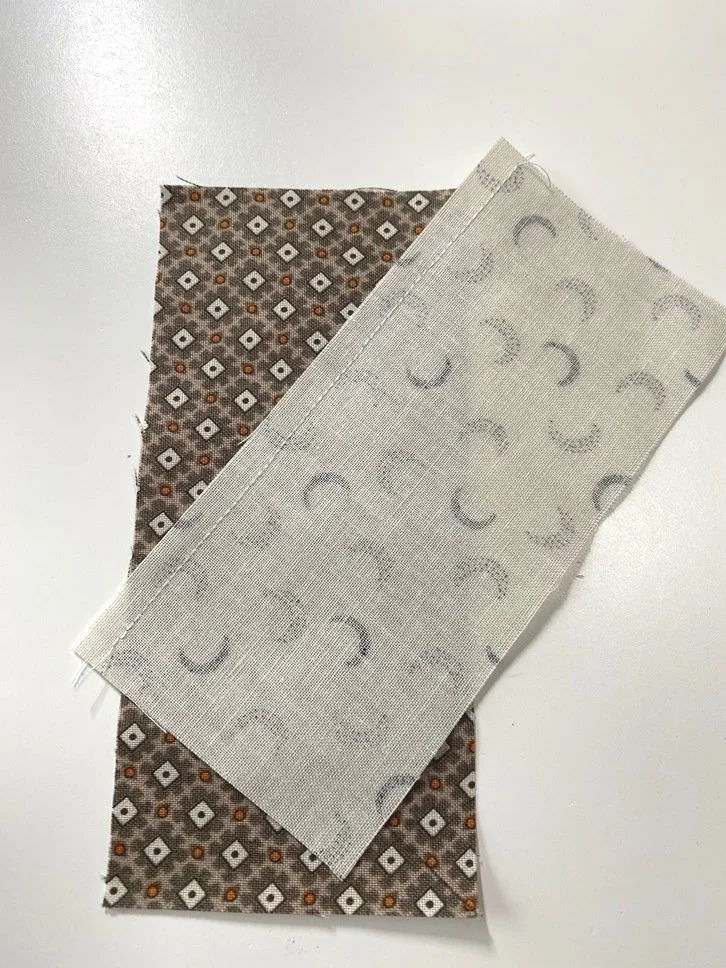
Two pieces of fabric, one with a geometric pattern of white diamonds and brown circles on a brown background, and the other with a light gray fabric featuring a pattern of semi-circles.

With right sides together, place the background rectangle on the top line first.
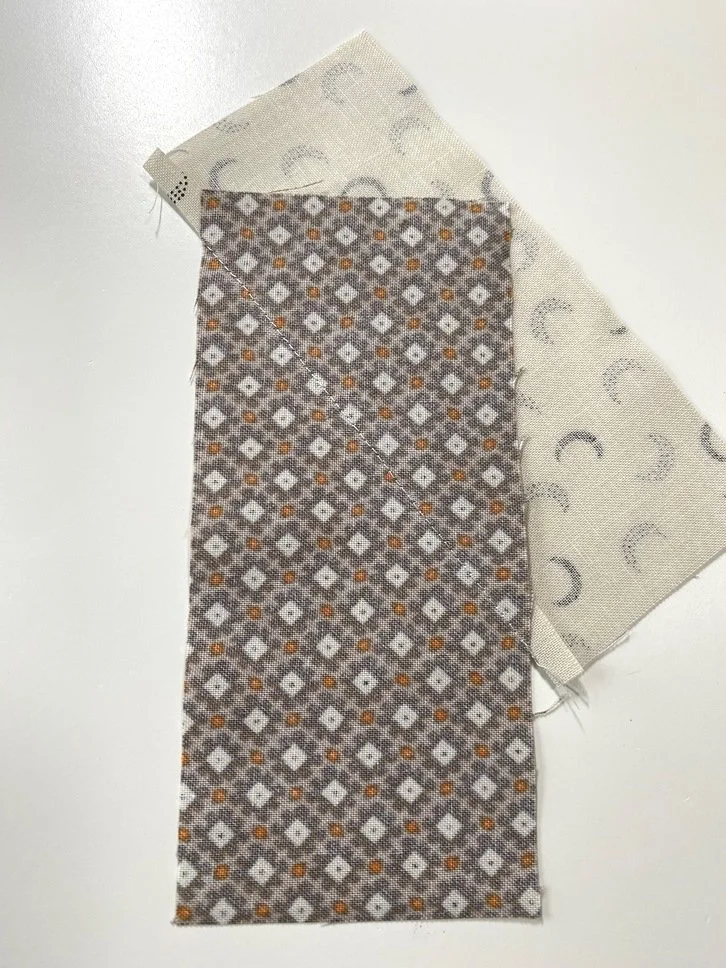
Two pieces of patterned fabric, one with a geometric diamond pattern in brown, white, and orange, and the other with a light beige background and small black crescent moon shapes.
A fabric piece with a detailed geometric pattern in brown, white, and orange, partially folded over on a white surface.
Piece of fabric with two different patterns, one with white background and black crescent moons and dotted semi-circles, the other with brown background and geometric diamond and dot designs.

Just like in the units ‘a ‘ and ‘c’, Unit ‘d’ is constructed using the same methods. Once the first background is stitched to the owl fabric, flip, and trim from the back side maintaining the size of the owl rectangle. Trim underneath.
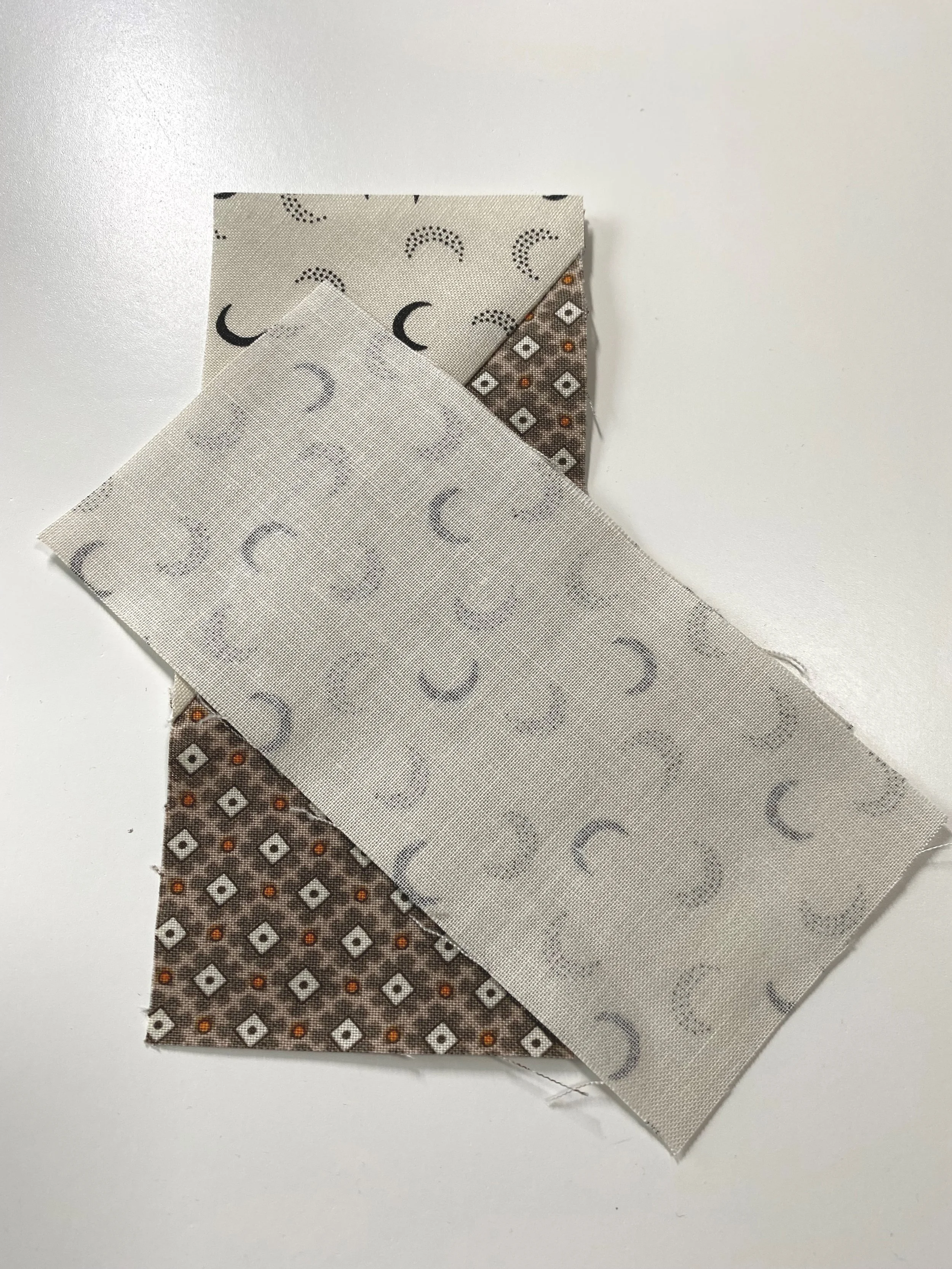
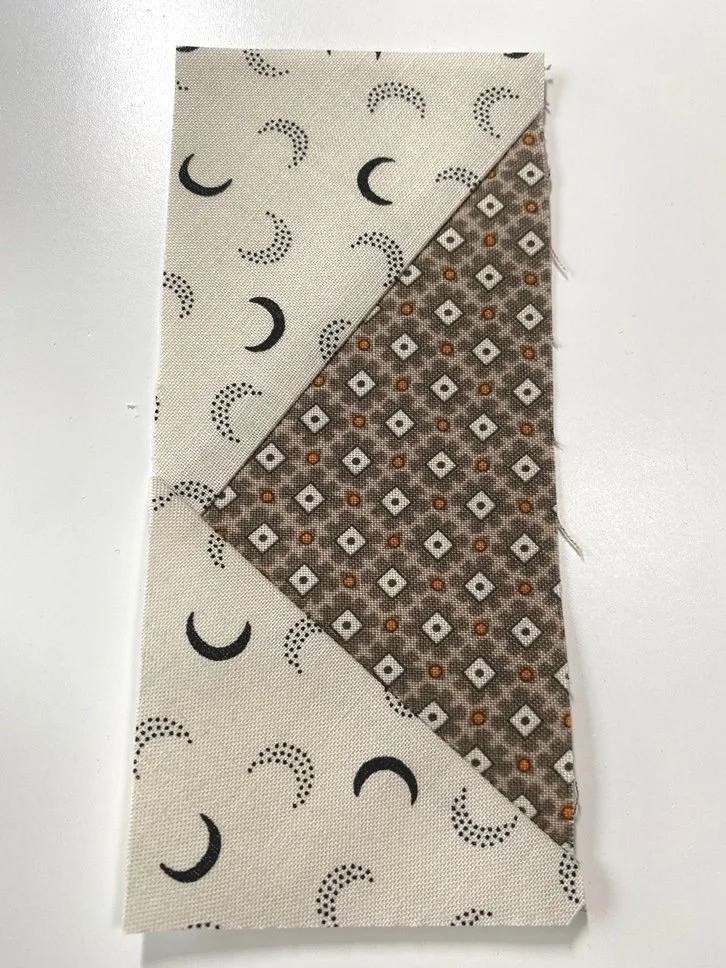
Three pieces of fabric with different patterns, one with moon designs, one with geometric shapes, partially overlapping on a white surface.
A piece of fabric with a white background and black crescent moon patterns on one side, and a brown geometric pattern with white diamonds and small orange circles on the other side.

Add the second background rectangle along the bottom line, sew, flip, trim and press. This completes Unit ‘d’.

Now we will piece all the units together beginning with Unit ‘a’ and ‘b’
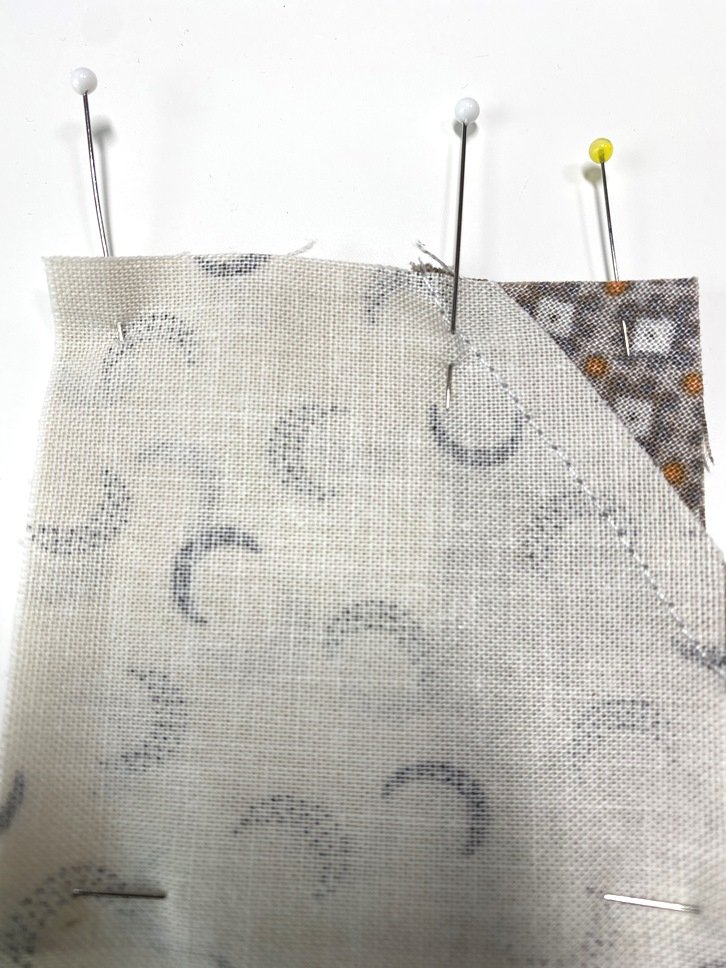
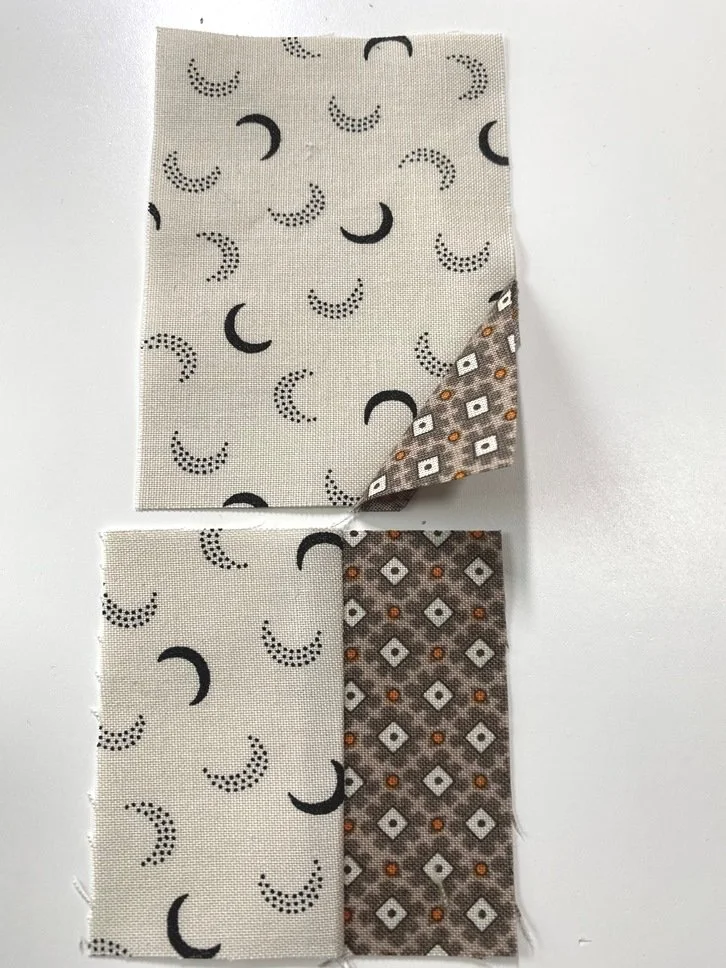
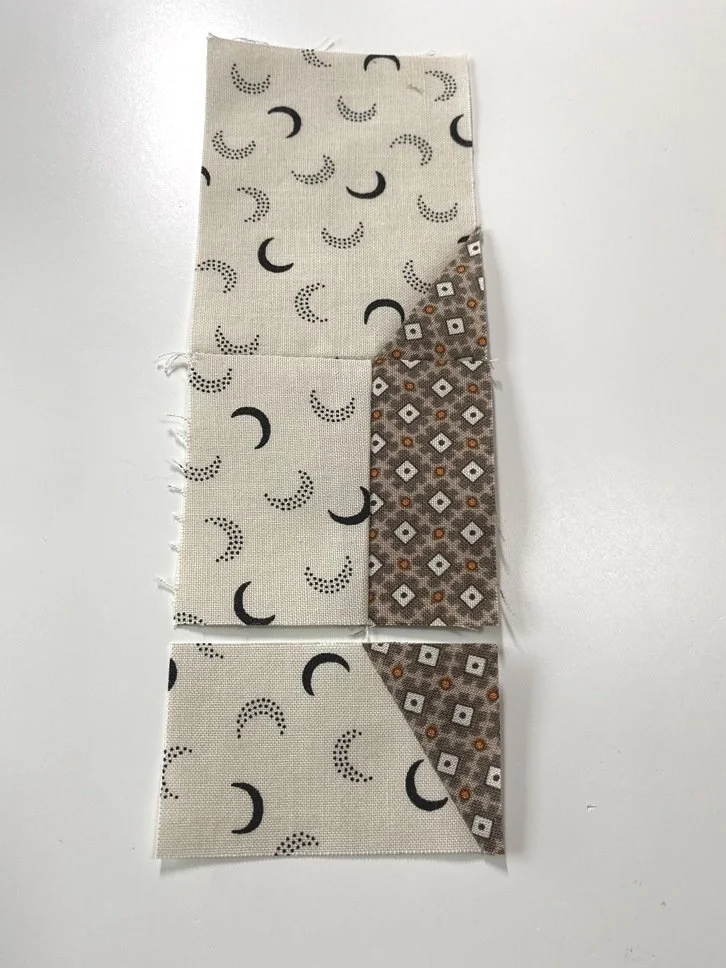
Place ‘a’ and ‘b’ right sides together and pin the ends first. Then match and pin the seams together.

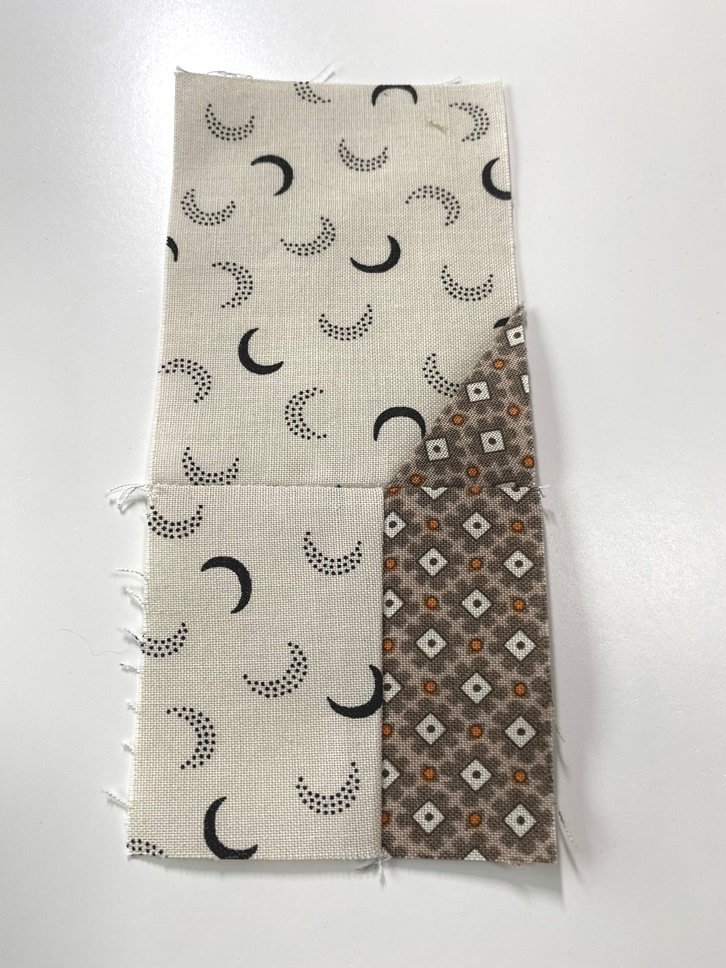
These little units can be tricky to line up. Here are some helpful tips:

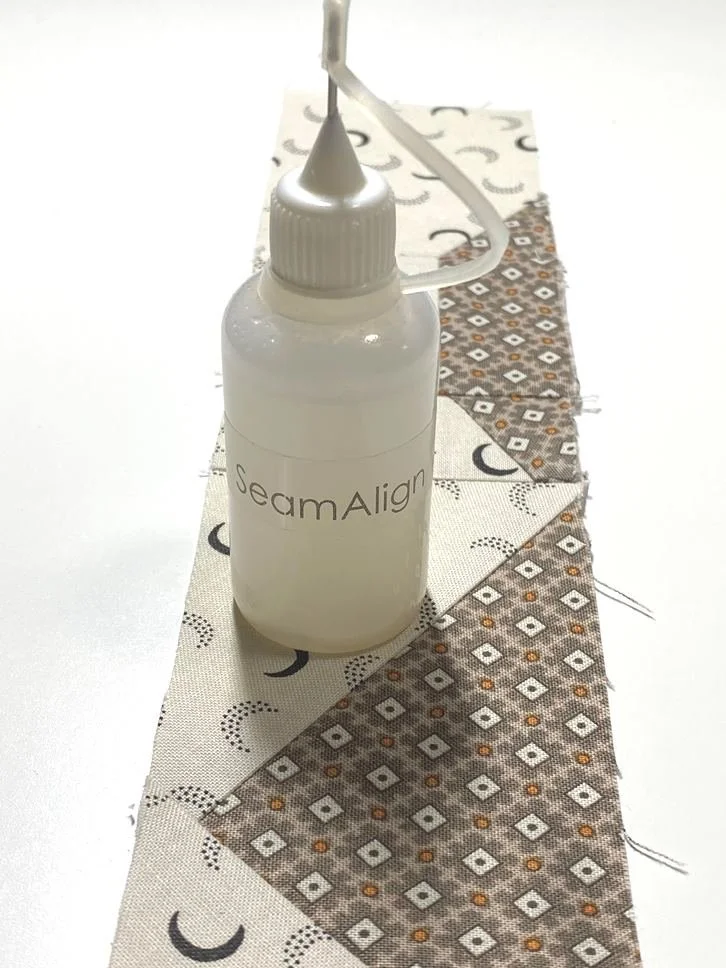
When lining up 2 units, i make a 1/4” mark across the diagonal seam and across the seam underneath. This identifies my seam allowance which helps line up the intersecting seams when i pin them together. I take a basting stitch across the intersecting seams (as shown in the second photo) to make sure everything lines up before I stitch it down for real. To be honest, i have a few that missed the mark. In the scope of things… we do our best. :)

There is also a great product called Seam Align. It's water soluble, non toxic, leaves no residue and once the seam is sewn together, you won't even know the light weight glue was there. As mentioned at the top of this tutorial, i use a lot of Magic Quilting and Crafting Spray. With the small pieces and bias edges, this product really prepares the fabric for situations like these.

Once the two top units are stitched together, add Unit ‘c’ as shown in the third photo above.
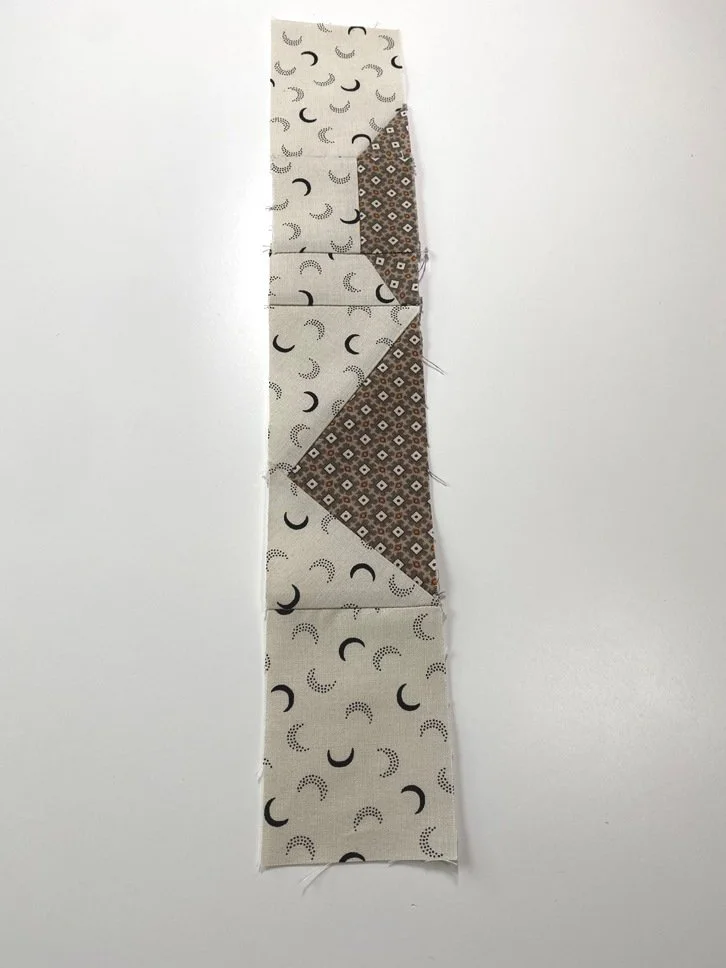
Complete the side section by sewing all the units together. The final Unit ‘e’ is listed on the top of page 6. Don’t forget to pay close attention to pressing instructions. I try to have seams nestle when i can.

This tutorial shows how to make the LEFT side section of the owl block. Page 5, Step 7 has a diagram of both the left and right side sections. I recommend laying out the fabric pieces (as shown in Photo 1 at the beginning of this tutorial) with the owl fabrics on the opposite sides of Units ‘a-c’ and the wing or unit ‘d’ will have the 3-1/4” mark on the opposite side of the brown rectangle to create the RIGHT side section.

And… Don’t forget to stabilize your fabrics before you cut them! I use Magic Quilting and Crafting Spray to tighten up the fibers and reduce bias stretch. It really helps!